உ
சிவமயம்
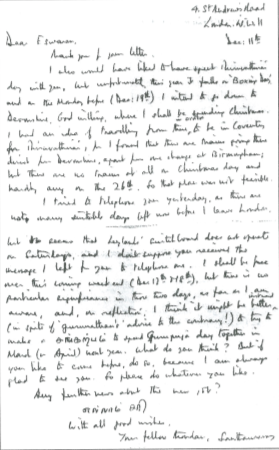
SANTHASWAMY LETTER – Sivathondan farm
A letter sent to a young man in the West, who asked about the purpose of the Sivathondan Farm at Chenkaladi, Ceylon.
You asked about the purpose of the farm here. The primary purpose of this farm (and this should be the primary purpose of all farms) is to grow food, and as much food as can be grown without depleting the fertility of the soil. Here, famine on a greater or smaller scale is always a possibility, and so this aspect has more direct importance than in Western countries. But apart from this general aim, the main idea is to have a few young men (say between the ages of 15 and 25) to live here and be trained as farmers. -This will not be simply a “farm school”, for those who come will live here under a certain religious discipline and atmosphere, but will spend the greater part of their time working in the fields.
The complete separation of religion from other aspects of life and the division of religion, philosophy, arts and sciences into separate compartments is an entirely modern phenomenon. In ancient times, in both the East and the West, this was not so. The whole structure and form of society then was like a pyramid with religion or God at the apex and all other activities of man subordinate to it, but related to it and in Eastern countries, particularly India, traces of the old traditional structure of society still persist to a greater extent than anywhere else, and it is very important to try to preserve this.
Anyway, on a small scale the same idea will apply here. Farming and religion will be taken as forming different aspects of one whole – the natural life of man. For without food, he cannot live. And, as a matter of fact it was farming that constituted the basis of the ancient traditional life, which is very ancient indeed, of the Tamil people among whom we are living here.
“Work is worship” – it has been said, and that is the idea here, as the name “Sivathondan” implies, for “Siva” is the name of the God, and “Thondan” has the meaning of “servant” and also that of “devotee”, and so “Sivathondan” means a “a devoted servant” of God or one whose work of service is devoted to God.” The idea is that all work – everything you do – you try to do in a spirit of detachment, regarding it as work for God and leaving the results to Him – “work for work’s sake.” This is not at all a new idea, and is the essence of the teaching of the Bhagavad Gita, of which you may not have heard as yet, but which later I am sure you will read and appreciate. I don’t know how much you will be able to understand from this very brief summary, and I expect it may all sound rather vague and theoretical to you, and indeed so it is at present, for as yet no young men have come forward to take part in this venture. The building in which they will live is there, and the land is there – the best in the district. At the moment we are farming it with hired labour. But that is also good, for during this period we are gaining the necessary experience and are learning first to become good farmers ourselves. At the right moment the right people will come, and that will be very good; and even if, for one reason or another, they don’t come, that will also be very good. For there is not and there cannot be anything wrong anywhere.
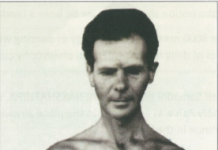
But he had already begun his restless search for a less conventional way of life. He had decided to study philosophy as the best guide to explaining the meaning of things, but he could not find the answers to his questions. And if this search was of no interest to his friends, he did not care.
While he was studying in Germany he was introduced to a group who were following a remarkable Russian teacher. Their work with him was to be kept secret – esoteric in character. It offered practical ways of thinking, behaving and perceiving, through self- observation and awareness to escape from the conflicting egos inside one and from the ceaseless round of false imaginings and identification.
Following the exacting requirements of these methods Jim changed his way of life, and this included leaving the export-import company which he had joined after Oxford, so that he could direct his concentration on this work.
At the outbreak of war, instead of joining up with his Oxford friends, in regiments or the guards to serve in a unit overseas, he managed to sign up with REME, rapidly mastering the professional techniques, so that he could continue his work with the groups in England.
At the end of the war he followed his teacher to America and later escorted him back to England, where he died. Jim himself continued to guide and teach groups in the same way.
And that was how he met Anthea who, with her mother, had also been attracted to the same teaching. They were wonderfully happy together with Anthea sharing so many of Jim’s hopes and aspirations.
And then the blow struck. A year or so after their marriage in 1949 she died with her son at childbirth. Jim was shattered. He carried, I think, a sense of guilt that he might have prevented it.Shortly after I had left for New York in 1953 with my family (to work in our UN delegation) he wrote to say he would be joining the Greek Orthodox Church and would I get him certain books. He had already paid several visits to Mt. Athos, but the day before he was to be inducted at the Orthodox ceremony he was visited by a German friend, a travelling friend in Sri Lanka, with a message for him from a Yogaswamy in Jaffna.
This was enough to prompt him to cancel the ceremony the next day – abandon that religious direction of faith – and go and live in Sri Lanka, and there to pursue his search under guidance for a true belief.
The next and longest stretch of his life was in Sri Lanka – paying visits home from time to time to see us and our families; keeping in touch through correspondence. I know that Siva Eswaran, in his tribute to my brother, will tell us about the years he spent there and the focus of his main life’s work, learning from Yogaswamy, following his wise teaching and instructions with his songs and sayings and the mission given to Jim.
When my wife Frances died suddenly at the end of 1982 Jim signalled to Joan and me to join him in Jaffna for a long stay. They were memorable days; a special solace for me in my sadness. For the last time, the three of us were close together again.
The Tamil rebellion hotted up in the North. Jim felt it was right for him to come home. For two years, before Zaida and I were married, Jim and I lived together at East Lane. I was supposed to do the cooking and he the washing up. Evening after evening, we were redrafting and editing his study of the Lord’s Prayer – to be entitled ‘A Recapitulation’ – which he and Joan, initially, had begun to assemble through correspondence three or four years before, and with me, too, in Bermuda.
The ‘Recapitulation’ is the only work of his own that he wished to present to a wider reading. We got it printed in 1985 by the Altresford Press, distributed by Element Books and, on his insistence, anonymously; but as published by JP Ross’ standing for “Joan, Peter, Ramsbotham, O’Grady, Soulbury Scripsunt”. Christopher Brill has described the essence of what Jim was thinking about the Lord’s Prayer; for him it was a “demonstration of what is the right Christian disposition or attitude, in the fullest and deepest sense. If we could really embrace and follow this prayer, it would give our thoughts a new direction and constitute the whole purpose of the Gospel teaching.”
Jim wished to recapture this important prayer for our age. His profound knowledge of the gospels was brought to bear on his studies across denominations and inter-faith barriers – with insight into the mystical writings of Christian, Jewish, Buddhist, Hindu and Sufi traditions. But All to support and clarify the reader’s devotion to Christ.
During the last 20 years of his life (after our marriage) Jim lived and worked in a small comfortable hut (his ashram) in our garden and there he was visited by those who might profit, especially Meredith and Oliver to whom he gave precious accounts and readings from what he had learnt and experienced. More important, he showed what he had become: his state of being. And this changed her life. For, by then, he had realised in his self what he had been searching for all this time-like Maeterlink’s story of the Blue Bird.
Sometimes, I thought, he carried to extremes the virtues of resolution and humility. He could be obstinate to a fault (e.g. refusing to see doctors), but also deeply humble; reluctant to speak about his beliefs and experiences, and preferring to respond in terms of the written word and the teachings he had received.
Some of the happiest days then were spent with Joan and Robert in their beautiful homes in Devon and near Bath. He loved being with them and joining in their lives.
Not socially minded he kept himself quietly at work and at peace in his ashram. He was very deaf but was known and admired by many in this village who would see this purposeful figure on his long daily walks in the country lanes.
Sadly, the last six years of his life were clouded by afflictions to his mind, from a series of strokes. But he was well cared for at the Old Alresford Rest Home, with Siva Eswaran as a wonderful and constant visitor helping him in all his needs. So, he died quietly and at peace.
I loved him very much. Thinking back on his long life I recall a poem which I learnt many years ago – though I do not know the author.
Nothing is enough,
Then ordered me to apply holy ash all over Lord Soulbury’s body.
And ordered me to dress Lord Soulbury in new clothes.
Ordered me to hold the sacred five lipped camphor lamp before him and do a pooja to him.
After this very unique ceremony, Yogaswamy said the following:
“From today onwards, you are a Sannyaasi (person who renounces the material world) and your name is Santhaswamy.”
I prostrated before both the Swamys as per my mother’s and my aunt’s orders.
Soon after this ceremony was over slowly people arrived from all directions – ten in all – and lunch was served.
Santhaswamy was sent to rest in a nearby friend’s him.
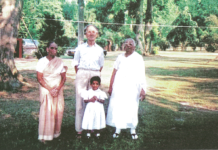
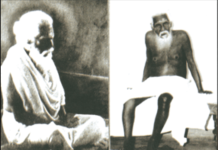
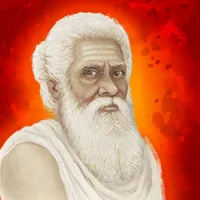
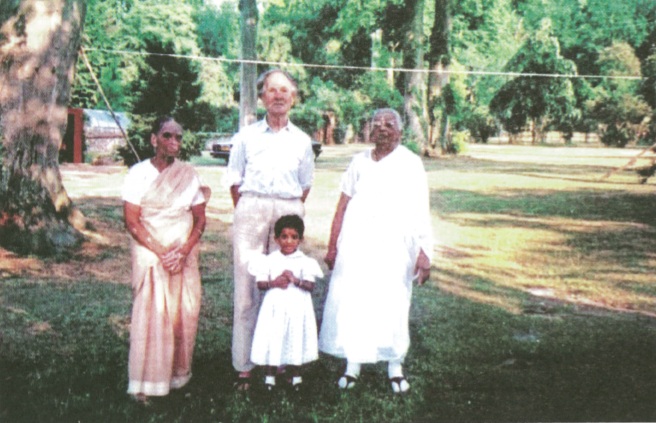
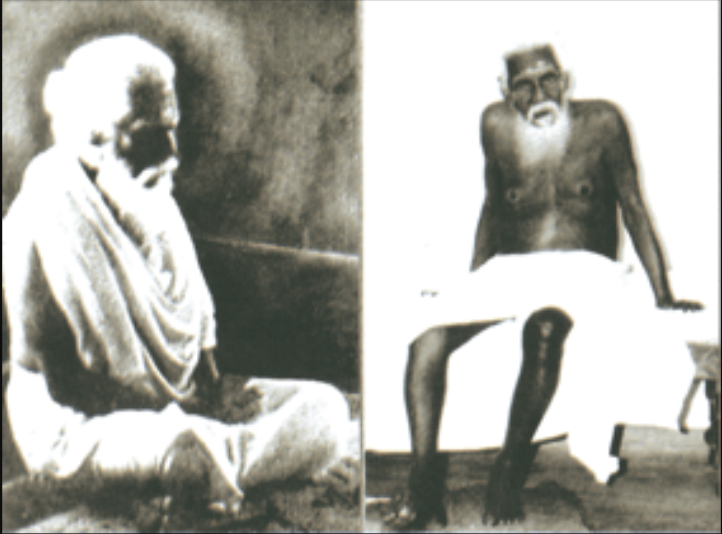
Yogaswamy visited him for tea in the evening. I took Yogaswamy, who was unable to walk due to an accident in 1961, on the wheelchair that was brought to Yogaswamy by Santhaswamy.
After this initiation in 1963 Santhaswamy resided in the Eastern Province of Sri Lanka, where he established ‘Sivathondan Nilayam’, which was an institution set up to encourage the young and old towards the path of self-help, duty and salvation. During this time Santhaswamy himself got involved in paddy cultivation and educating the youth in farming practices and self-discipline. Santhaswamy also set up a women’s Centre in the North of Sri Lanka to help young ladies to get involved in textile manufacture, while strengthening their religious beliefs.
The last few years before Yogaswamy’s attainment in 1964, I was able to nurse him daily and used to take him for a journey in the wheel chair both morning and evening before and after attending school. A duty that I was fortunate to perform for Santhaswamy, whenever required until 12 December 2004.
His erudite knowledge of Vedanta, Siddhanta, the Yoga Shastras and the other scriptures of the Hindus, his study of ancient Tamil language and the proficiency he obtained in that language, his metrical translation into English of the book Natchinthanai (literally means good thoughts in Tamil), a compilation of songs and sayings of Yogaswamy are achievements par excellence. Santhaswamy wrote another book titled ‘A Recapitulation of the Lord’s Prayer’ while in Sri Lanka and ‘Positive Thoughts for Daily Meditation’ after returning to England.
In his writings, Santhaswamy says, ‘there is only one Reality, which is God or ‘That’, so that ‘realisation of Truth’ means being aware that you are one with God… This is the meaning of ‘know thyself…’
Perhaps referring to his ‘initiation’ by Appu, Santhaswamy says,’ on a higher level it is the inception of ‘new birth’ and corresponds, on a subtle plane, to the physiological process…’ and goes on to say that, ‘… the interval between the moment of initiation and the actual realization of Truth may be longer or shorter according the ‘ripeness’ of the disciple…’
I bow down, I salute, I prostrate myself along with other people of my country who know
Lord Soulbury, better known to them as Santhaswamy.
We prostrate ourselves before the light set upon a hill, this mountain of light, mother, father and teacher.
There is not even one wrong (or harmful) thing
We do not know
It was all finished (accomplished) long long ago (or it was all perfect and complete from the very beginning)
All is truth (the entirety of everything is the reality)
- Siva Yoga Eswaran
Birmingham,
England
23-12-2004